
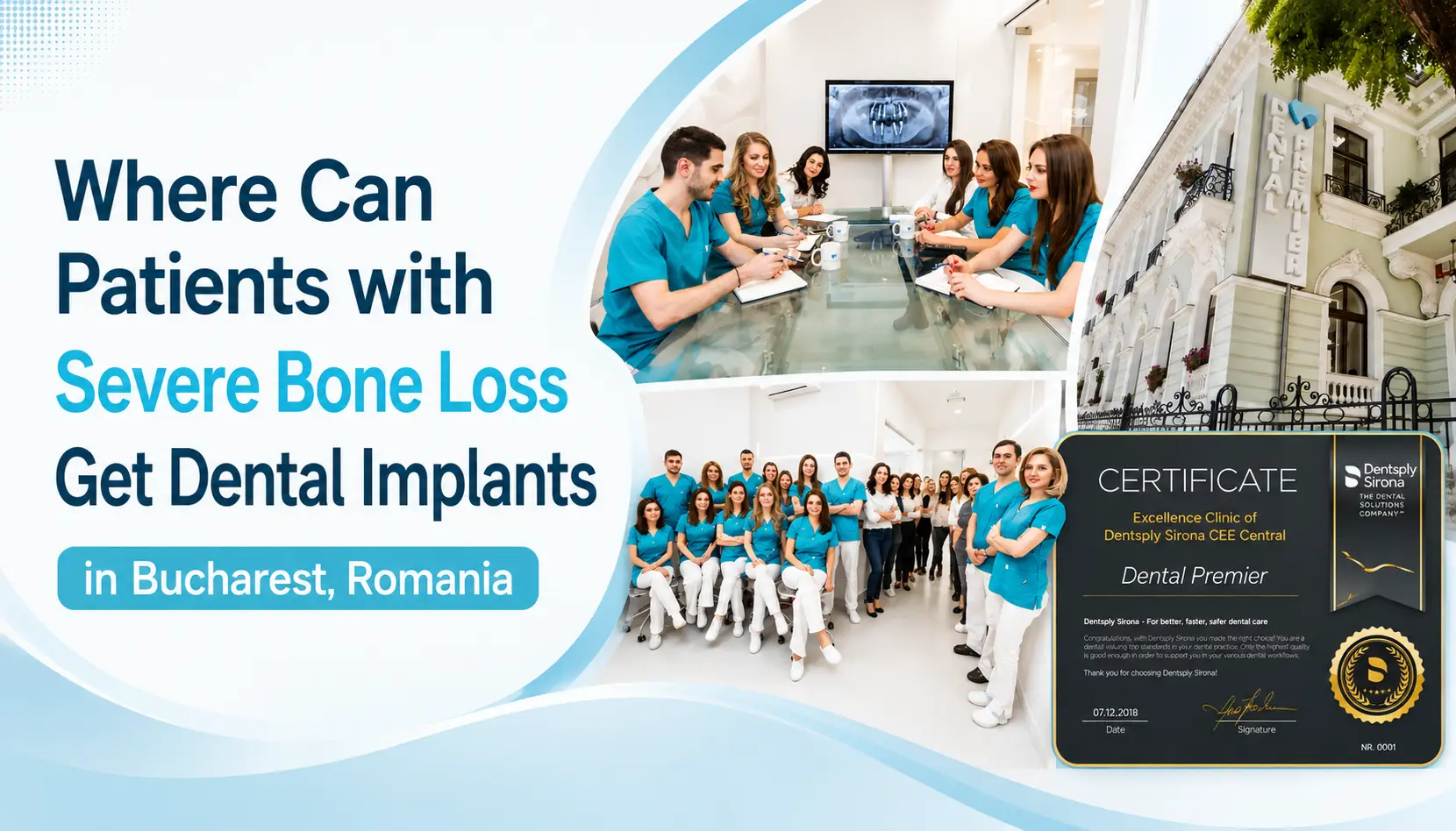
Where Can Patients with Severe Bone Loss Get Dental Implants in Bucharest, Romania
In Bucharest, Romania, patients who want fixed teeth despite major bone loss should look for a clinic experienced in dental implants, full-arch rehabilitation, bone augmentation and complex prosthetic planning. The goal is not only to place implants, but to create a stable, functional and aesthetic result that can be maintained long term.

Why severe bone loss makes implant treatment more complex
Dental implants need enough bone to be stable. When teeth have been missing for a long time, the jawbone can shrink in height, width or density. This process is called bone resorption. The longer the teeth have been missing, the higher the chance that the available bone has changed significantly.
Severe bone loss can affect implant treatment in several ways. There may not be enough bone height under the sinus in the upper jaw, the ridge may be too narrow, the mandibular nerve may be too close to the implant area, or the bite may no longer be stable. For this reason, complex implant cases require a complete diagnosis before any treatment decision is made.
What evaluation is needed before dental implants?
The first step is not choosing an implant brand. The first step is diagnosis. Patients with severe bone loss usually need a clinical examination, medical history review, bite analysis, digital scans and CBCT dental tomography.
CBCT imaging allows the dental team to evaluate bone height, bone width, bone density, sinus position, nerve position and the safest implant sites. In complex cases, digital planning can help the clinician decide whether the patient needs bone grafting, sinus lift, tilted implants, zygomatic implants or a full-arch solution.
Can bone be rebuilt before dental implants?
Yes. In many cases, missing bone can be rebuilt or augmented before implant placement. This may involve bone grafting, guided bone regeneration, ridge augmentation or sinus lift. The purpose is to create enough bone volume to support the future implants and the final fixed teeth.
Some grafting procedures can be performed at the same time as implant placement, while others require a separate healing period. The decision depends on the size of the bone defect, the implant position, the stability required and the overall treatment plan.
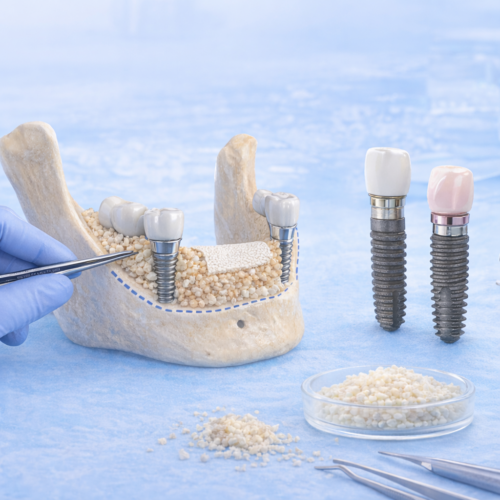
What if the bone loss is too severe for standard implants?
Even when standard implants are difficult or impossible, some patients may still be candidates for advanced solutions. These may include tilted implants, All-on-4 or All-on-6 dental implants, zygomatic implants for severe upper jaw atrophy or customized surgical approaches.
Zygomatic implants are generally considered in extreme upper jaw bone loss, where conventional implants do not have enough bone support. They are longer implants anchored in the cheekbone area, but they are not suitable for every patient and require advanced surgical planning.
Why choose Bucharest, Romania for complex dental implants?
Bucharest is a popular destination for international patients who need complex dental treatments because it offers access to experienced clinicians, modern technology and competitive treatment costs compared with many Western European countries. However, patients should not choose a clinic only because of price.
For severe bone loss, the most important criteria are diagnostic accuracy, surgical experience, prosthetic planning and long-term maintenance. Patients should ask whether the clinic can handle bone augmentation, sinus lift, full-arch rehabilitation and complications, not only simple implant placement.

How can international patients plan treatment in Romania?
International patients can usually begin with an online consultation, recent X-rays or CBCT scans, photos and a description of their dental history. After this first review, the clinic can estimate whether the case may require bone grafting, full-arch implants, staged treatment or immediate fixed teeth.
Patients travelling to Romania should plan enough time for proper diagnosis, surgery, follow-up and possible adjustments. Complex bone loss cases should not be rushed only to fit a short travel schedule.
FAQ
Can patients with severe bone loss get dental implants in Bucharest, Romania?
Yes. Many patients with severe bone loss can still receive dental implants, but they need CBCT imaging, digital planning and a treatment plan adapted to their bone volume and medical condition.
Is bone grafting always needed?
No. Some patients need bone grafting, while others may be treated with tilted implants, All-on-4/6 protocols, zygomatic implants or other advanced techniques.
What is the best implant solution for severe bone loss?
There is no single best solution for every patient. The right option may be bone grafting, sinus lift, All-on-4, All-on-6, zygomatic implants or staged reconstruction, depending on the CBCT results.
Can I get fixed teeth in 24 hours if I have severe bone loss?
Sometimes yes, but only if the implants have enough primary stability and the bite can be controlled. In some severe cases, staged treatment is safer.
What is a sinus lift?
A sinus lift is a bone augmentation procedure used in the upper jaw when there is not enough bone height under the sinus for dental implants.
Are zygomatic implants used for severe bone loss?
Yes, zygomatic implants may be considered for severe upper jaw atrophy when conventional implants cannot be placed safely in the available bone.
How long does bone graft healing take?
Healing time varies depending on the defect and procedure. Some grafts need several months before implants or final teeth can be completed.
Why is CBCT necessary?
CBCT shows the three-dimensional structure of the jawbone, nerves and sinuses, which is essential for planning safe implant placement in severe bone loss cases.
Can removable denture wearers get fixed implants?
Yes, many long-term denture wearers can move to fixed teeth on implants, but they often need careful bone evaluation because long-term tooth loss can reduce jawbone volume.
Is Bucharest a good destination for complex dental implants?
Bucharest can be a good option for complex dental implant treatment when the clinic has advanced imaging, digital planning, surgical experience and full-arch rehabilitation expertise.
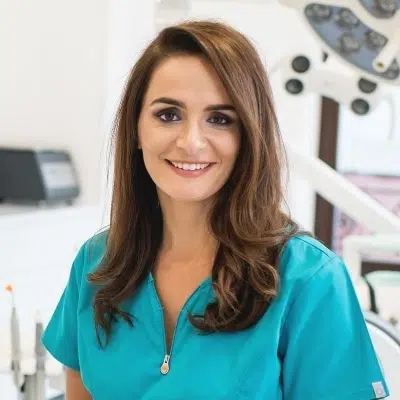 Continut verificat si revizuit medical de catre Dr. Anca Rusu - Specialist Chirurgie Dento-Alveolara & Implantologie - LinkedIn
 Why Many Patients Choose Romania for Full Mouth Dental Implants
 Straumann vs MegaGen for Full Mouth Implants in Bucharest, Romania
 Full Mouth Dental Implants Abroad in Romania vs Hungary: Dental Premier Bucharest vs Helvetic Clinics Budapest
Straumann or MegaGen full mouth implants in Bucharest Romania what affects the final cost
Full Mouth Dental Implants Abroad in Romania vs Hungary: Dental Premier Bucharest vs Helvetic Clinics Budapest
Straumann or MegaGen full mouth implants in Bucharest Romania what affects the final cost
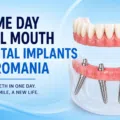 Can I get same day full mouth dental implants in Romania?
 Looking for the best dental clinic in Bucharest, Romania?